These days staying organized and maintaining productivity can be a challenging task. With the myriad of responsibilities, goals, and tasks that fill our days, finding an effective system to manage everything can make a significant difference in our personal and professional lives. One of the most powerful ways to enhance productivity is by combining a journal and a planner. This approach allows individuals to integrate self-reflection with time management, leading to a more holistic and efficient way of achieving goals and maintaining balance.
In this article, the ZEBRA team will explore the benefits of journals and planners, how they complement each other, and tips for maximizing productivity by using both tools effectively.

Understanding Journals and Planners
To fully appreciate the synergy between journals and planners, it’s essential to understand what each tool offers individually. Both have distinct purposes and benefits, but when used together, they can create a comprehensive system that enhances both personal growth and productivity.
Journals
A journal is more than just a book of blank pages; it is a personal space where individuals can engage in self-reflection, explore their thoughts and emotions, and document their ideas. Journaling is a practice that has been valued for centuries, offering people a way to connect with their inner selves, gain clarity on their experiences, and articulate their aspirations.
One of the most significant benefits of journaling is the opportunity it provides for free-flowing expression. Unlike structured writing tasks, journaling allows individuals to write freely about their experiences, challenges, and dreams without the constraints of form or judgment. This process often leads to deeper self-understanding and insight, as the act of writing helps to clarify thoughts and emotions that may otherwise remain unexamined.
Bullet Journal
Journals come in various formats, each designed to suit different purposes. For instance, a bullet journal idea combines elements of both a planner and a diary, allowing users to create custom layouts for tracking tasks, goals, and personal reflections. This flexibility makes bullet journals particularly popular among those who want to integrate planning and journaling into one cohesive system.
Gratitude Journal
Another type of journal is the gratitude journal, which focuses specifically on documenting things the writer is thankful for. This practice promotes a positive mindset and emotional well-being by encouraging individuals to reflect on the good in their lives, no matter how small. Regularly writing in a gratitude journal can shift one’s perspective, fostering a more optimistic outlook and reducing stress.
Journaling enhances self-awareness and creativity by providing a structured yet flexible outlet for personal expression. Regular writing encourages individuals to explore their thoughts deeply, leading to greater clarity about their goals, values, and motivations. This reflective practice can also foster creativity by allowing ideas to flow more freely and be developed without immediate constraints.
Additionally, journaling offers a dedicated space for emotional processing, helping individuals manage stress and gain mental clarity. By writing about daily experiences and emotional responses, people can better understand their reactions and find constructive ways to address their feelings, leading to improved emotional resilience and mental health.
Planners
While journals focus on self-reflection and personal growth, planners are designed to help users manage their time and tasks more effectively. A planner typically includes calendars and spaces for scheduling daily, weekly, or monthly activities, allowing individuals to organize their responsibilities and plan their days strategically.
Daily Planner
Planners come in different formats, each tailored to meet varying needs for time management and goal tracking. Daily planners provide detailed layouts for each day, allowing users to break down their tasks hour by hour. This format is ideal for those who have a busy schedule and need to allocate specific times for meetings, appointments, and tasks.
Weekly Planner
Weekly planners offer a broader view of the week at a glance, which can be useful for setting priorities and managing longer-term projects. This format allows users to see how their tasks fit together over several days, making it easier to balance work, personal life, and leisure activities.
Monthly Planner
Monthly planners allow users to see their entire month’s schedule, making it easier to plan for upcoming events, deadlines, and goals. This format is particularly useful for long-term planning and setting milestones, as it provides a big-picture view of the month ahead.
Planners facilitate goal tracking by allowing users to set and monitor progress towards both short-term and long-term objectives. By regularly reviewing their plans and achievements, individuals can stay motivated and make necessary adjustments to their strategies, ultimately leading to more effective goal attainment and personal growth.

The Synergy Between Journals and Planners
While journals and planners each have their unique benefits, combining them can lead to even greater productivity and personal growth. The key to maximizing the effectiveness of these tools lies in understanding how they complement each other.
Enhancing the Planning Process with Journals
Journals offer a space for personal reflection and deep thinking, which can significantly enhance the planning process. By regularly writing about experiences, thoughts, and feelings, individuals gain insights into their priorities and goals. This reflective practice can reveal patterns and preferences that inform more effective planning.
For instance, journaling about daily challenges and successes can help identify which tasks are most fulfilling or which strategies are most effective. This awareness allows for better-informed decisions when scheduling future activities and setting goals. Additionally, reflecting on past experiences can provide valuable lessons that help refine planning strategies, making them more aligned with one’s personal values and long-term aspirations.
Structuring Journaling with Planners
On the other hand, journals and planners provide a structured approach to managing time and tasks. By establishing a clear framework for daily, weekly, or monthly activities, planners help individuals create a routine that supports regular journaling.
This structured approach ensures that journaling and planning becomes a consistent part of one’s schedule rather than an ad hoc activity. For example, setting aside specific times in a planner for journaling—such as a morning reflection or an evening review—can help integrate this practice into daily life, making it more likely to be maintained over the long term.
Integrated Systems for Seamless Productivity with Journal and Planner
Some journals and planners are designed with integrated layouts that combine both journaling and planning elements, providing a seamless way to manage tasks and reflect. These hybrid systems allow users to plan their days while also capturing their thoughts and reflections in one place.
For example, a daily planner might include sections for scheduling tasks, as well as spaces for noting down thoughts, reflections, and gratitude. This integrated approach encourages a balance between doing and reflecting, ensuring that productivity is not just about ticking off tasks but also about personal growth and self-awareness.

Tips for Maximizing Productivity
Combining a journal and planner can significantly enhance your productivity, but to get the most out of this approach, it’s important to tailor it to your personal preferences and needs. Here are some tips for maximizing productivity with a journal and planner.
Customize Your Tools
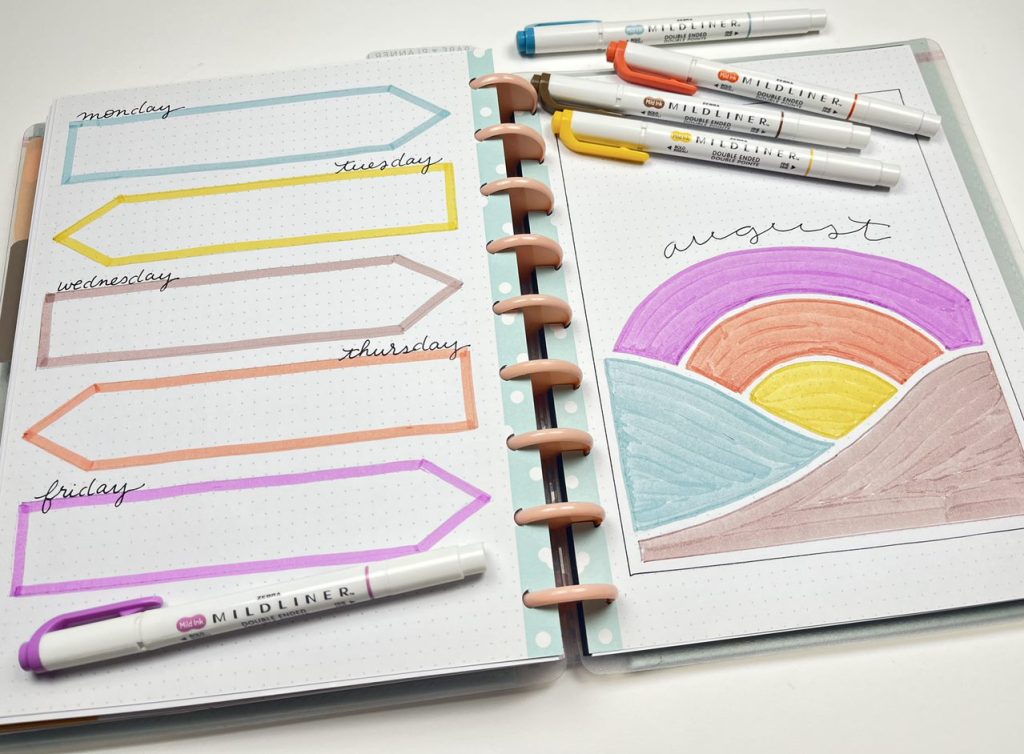
Adapt your journaling and planning tools to match your personal preferences and workflow. For example, use color-coding or specific layouts that enhance your organization and motivation. Some people find that using different colors for different types of tasks or reflections can help them stay organized and focused.
If you prefer a more minimalist approach, you might opt for a simple layout with clean lines and plenty of white space. On the other hand, if you enjoy creativity and visual stimulation, you might choose a planner or journal with more elaborate designs, stickers, or illustrations.
You can also decorate your planner and journal with arts and crafts tools to make it more stylish and beautiful.
Incorporate into Your Daily Routine
One of the most effective ways to maximize productivity is to incorporate journaling and planning into your daily schedule. Consistency is crucial for building habits, keeping you organized, and allowing for regular tracking and adjustments.
For example, you might start your day by planning in the morning, reviewing your tasks, setting priorities, and scheduling your activities. At the end of the day, you can use your journal to reflect on your experiences, document your thoughts, and assess your progress.
Stay Flexible and Adaptable
While consistency is important, it’s also essential to stay flexible and adaptable. Be ready to modify your system as goals and circumstances change. Life is dynamic, and your productivity tools should be too.
For instance, if you find that your current planning system is no longer effective, don’t hesitate to update your planner or journaling methods to reflect new priorities or challenges. This might involve switching to a different type of planner, adjusting your daily routine, or incorporating new journaling prompts.
By remaining open to change and willing to adapt your system, you ensure that it remains useful and relevant, supporting you through various stages of life.
Journal and Planner
Combining a journal and planner can significantly enhance your productivity by integrating reflection with organization. Journals provide a space for deep thinking and self-reflection, which can inform more effective planning. Planners, in turn, offer structure and time management, making it easier to incorporate regular journaling into your routine. Together, these tools create a powerful system that supports both personal growth and productivity. By customizing your system, maintaining consistency, and remaining flexible, you can create a tailored approach that adapts to your evolving needs and supports continuous personal and professional growth.