Every artist knows the feeling of being inspired, but turning that inspiration into something real often comes down to having the right tools in hand. Whether you’re sketching a quick idea or working on a detailed piece, the writing instrument you choose can make all the difference. From pens to pencils, these everyday tools help unlock your creativity and let your unique style shine.
The Role of Tools in Artistic Expression
Using a writing tool connects your hand with your thoughts, helping you put emotions and ideas onto paper in a natural, intuitive way. This connection is often the first step in unlocking your artistic potential.
Bridging Thought and Action Through Tools
The act of holding a pen or pencil is more than just physical; it’s a neurological bridge that links your inner world to outer expression. Writing instruments act like extensions of the brain, allowing thoughts to flow into shape and form. This feedback loop strengthens your ability to express artistic potential with immediacy and clarity.
Analog tools offer a tactile experience that deepens immersion. The scratch of graphite, the glide of ink, and the texture of paper engage the senses, making it easier to enter a state of focused creativity. This sensory engagement not only sharpens technique but also nurtures artistic potential by keeping the mind fully present in the act of creation.
How Different Tools Shape Style and Movement
Different tools shape not just your technique, but how your artistic potential unfolds. A brush pen, for instance, invites bold, sweeping gestures perfect for expressive pieces, allowing creativity to stretch beyond the page. In contrast, a technical pen delivers precise, uniform lines that are essential for detailed and controlled illustrations.
Switching between tools often reveals different sides of your artistic potential. Some tools encourage experimentation and freedom, while others promote structure and discipline. By exploring both ends of this spectrum, artists develop a fuller range of skills and visual language.
Tools Define Medium and Artistic Direction
The medium you work in is often shaped by the tool in your hand. For example, a fountain pen loaded with deep black ink might nudge you toward ink drawings or lettering. The way the nib distributes ink naturally invites a slower, more deliberate pace, ideal for fine art or journaling. This kind of deliberate process can help artists better connect with their artistic potential through thoughtful mark-making.
Meanwhile, a soft graphite pencil encourages tonal play, layering, and shading. It invites smudging, blending, and sketching from light to dark, perfect for portraits, landscapes, and figure studies. Colored pencils might open up a playful or stylized world, while chalk pastels push toward bold, tactile experimentation. Each of these tools acts as a gateway to a different facet of your artistic potential, revealing styles or themes you might not have accessed otherwise.
Your choice of tool can be the gateway to new forms of expression. Many artists discover new styles simply by experimenting with instruments outside their comfort zone, switching from ballpoint to brush tip can lead to a dramatic shift in tone and intention, and with it, an evolution of their artistic potential.
Developing a Personal Style Through Repetition
The more often you use a particular tool, the more fluent you become in its language. Just like a musician becomes more expressive with a favorite instrument, an artist can develop signature lines, hatching techniques, or textures that are hard to replicate with other tools. This habitual use leads to consistency in line weight, shading, and even in the pace and rhythm of creation, all of which are foundational to growing your artistic potential.
Over time, these characteristics form a recognizable artistic fingerprint. Think of the signature in Quentin Blake’s energetic pen strokes or the detailed graphite shading in Leonardo da Vinci’s notebooks, each tool shaped their output in a way that became iconic. Their consistent choice of tools was key to unlocking their artistic potential and making it unmistakably theirs.
Sticking to familiar tools also builds muscle memory. You know how hard to press, how fast to move, how the tool reacts to different surfaces. This physical comfort translates into emotional comfort, which in turn breeds creative confidence and helps your artistic potential flourish more naturally and effortlessly.
Emotional Connection and Creative Confidence
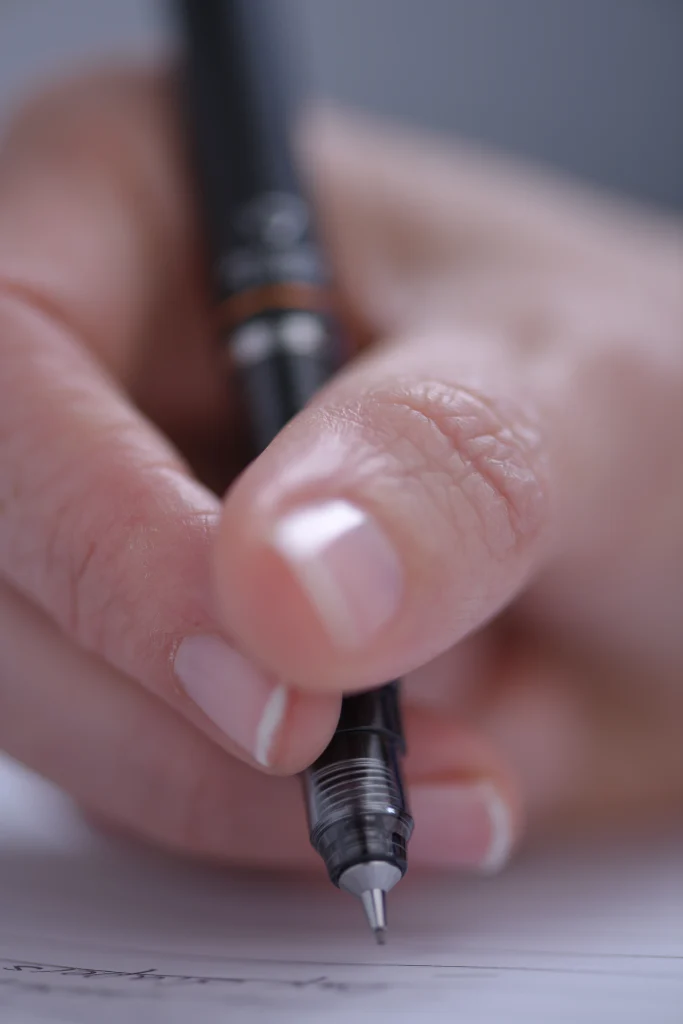
One of the most underrated aspects of choosing the right tool is how it makes you feel. An artist’s favorite pen or pencil isn’t just a tool, it’s a trusted companion. The balance, weight, texture, and response of a familiar instrument can evoke a sense of readiness, similar to a runner lacing up well-worn shoes. That emotional readiness is directly tied to your artistic potential.
When an artist feels in sync with their tool, self-doubt tends to fade. There’s less hesitation, fewer breaks in the flow, and more trust in spontaneous choices. This connection removes friction between idea and execution, allowing pure creativity to emerge and empowering your artistic potential to be realized in every mark.
For beginners, finding this comfort zone can take time. But once discovered, it becomes a powerful enabler, turning moments of inspiration into finished pieces without interruption. That feeling of flow, security, and ease is where artistic potential truly thrives.
Why Mechanical Pencils Are Among the Best Versatile Writing Instruments
Mechanical pencils are one of the most flexible and practical tools for artists at any stage. They offer steady, clean lines that are perfect for both quick sketches and detailed work. You don’t need to sharpen them, so you can focus on your ideas without breaking your flow or disrupting your artistic potential.
Whether you’re a beginner exploring your style or a professional designer working on a complex drawing for beginners, mechanical pencils are easy to use and adjust to your needs. Their consistent performance makes them ideal for everything from class notes and doodles to storyboards and concept art. This consistency is key for developing technique and refining your artistic potential with every stroke.
Many mechanical pencils are refillable, which makes them more sustainable and cost-effective. Instead of constantly buying new tools, you can keep your favorite pencil and just replace the lead. They’re also small and mess-free, so you can carry them anywhere, ready to catch inspiration and support your artistic potential whenever it hits.
Another advantage of mechanical pencils is the wide range of lead types and sizes they support. From soft, smudgy B leads for expressive shading to harder H leads for clean, technical precision, you can customize your pencil to suit different artistic needs without changing the tool itself. Lead widths—from ultra-fine 0.3 mm to bold 0.9 mm—further expand the possibilities, giving you full control over line weight and texture. This adaptability makes mechanical pencils a reliable companion for mixed-media artists who shift between sketching, outlining, and drafting, constantly pushing the boundaries of their artistic potential.
Mechanical pencils also encourage disciplined technique and clean working habits. Because the lead stays sharp and the tip is always consistent, they demand and reward intentional strokes, helping artists refine their line control and hand steadiness over time. In professional or academic environments where presentation matters, this precision is especially valuable. Whether you’re designing fashion, mapping storyboards, or annotating diagrams, a mechanical pencil offers the sharpness and reliability to bring your vision, and your artistic potential to life, line by line.

Why the ZEBRA DelGuard Mechanical Pencil Stands Out
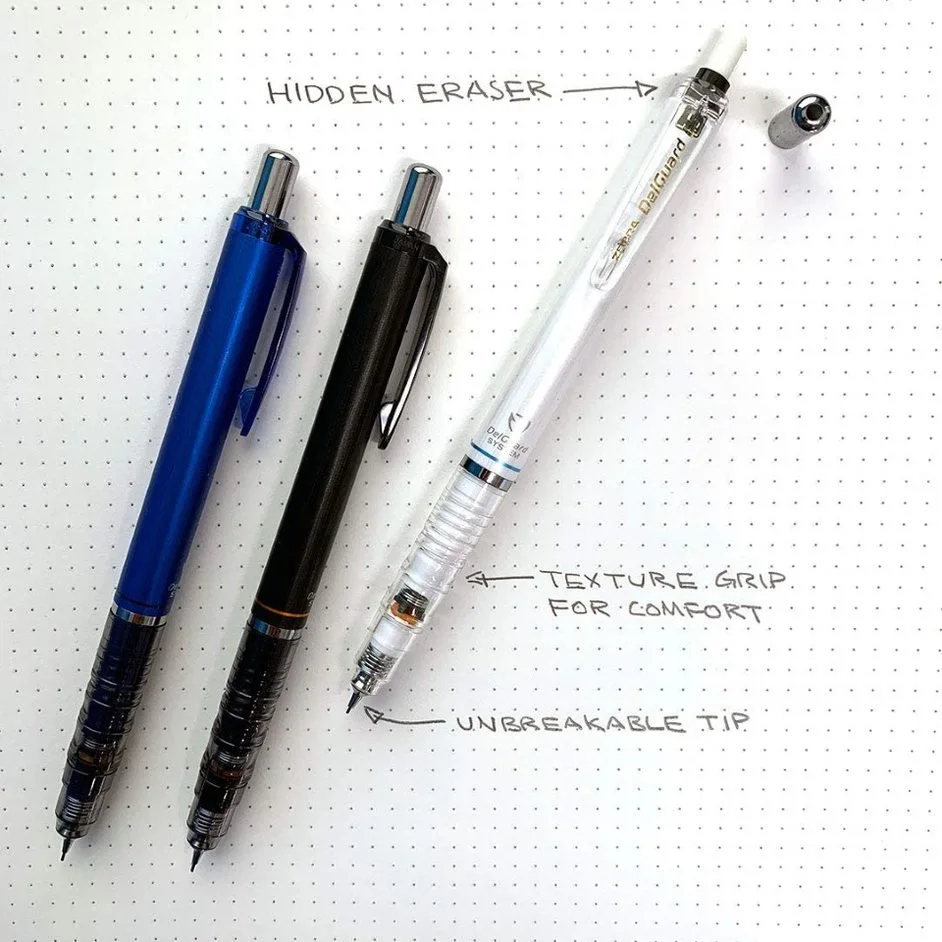
Among the many options out there, the ZEBRA DelGuard stands out as a smart and reliable choice for creative minds. It features an unbreakable tip, even under pressure. This makes it an ideal tool for artists, students, and designers who want to sketch, write, or draft without the interruption of snapping lead. The DelGuard responds to your hand movements with precision, maintaining a steady line and smooth flow that supports your creative rhythm from the first stroke to the last.
Comfort is just as important as performance, and the DelGuard delivers on both. Its soft, non-slip grip provides stability and reduces strain, making it easy to work through long drawing sessions or extended writing periods. A built-in eraser ensures you can make quick corrections without switching tools, while a durable clip allows you to carry it securely in a pocket, notebook, or sketchbook cover. Everything about its design is intended to support mobility, ease of use, and long-term reliability.
The pencil is available in two lead sizes, 0.5 mm and 0.7 mm, giving you the freedom to choose based on your drawing preferences. The finer size is perfect for detailed line work, while the slightly thicker lead supports bold sketching and dynamic strokes. Both options are easy to refill, making the DelGuard an economical and eco-conscious choice over time. Its stylish color variations and sleek, professional appearance also make it a pleasure to use, whether you’re creating at home, in class, or on the go.
What truly makes the ZEBRA DelGuard special is how it blends technical innovation with an intuitive, tactile experience — thanks to a unique unbreakable tip. The double-spring mechanism inside the pencil is designed to adapt to the angle and pressure of your hand, absorbing impact and keeping the lead protected from all sides. This not only improves functionality but also builds trust in the tool itself. You can focus entirely on your idea, knowing the pencil will respond faithfully to every movement.
For many creatives, the DelGuard becomes part of their process. From the satisfying click of advancing the lead to the consistent feel of the tip gliding across the page, every detail is designed to support your workflow. Whether you’re capturing fleeting ideas or refining final illustrations, the ZEBRA DelGuard empowers you to express yourself freely, comfortably, and with complete control.
Conclusion
Unlocking your artistic potential doesn’t require fancy equipment. It starts with the right tools that support your style and creativity. Mechanical pencils, especially thoughtful designs like the ZEBRA DelGuard, offer comfort, an unbreakable tip, control, and freedom to create whenever inspiration strikes. Whether you’re starting your artistic journey or refining your signature look, the tools you choose can empower you to bring your ideas to life with confidence and ease.
Find your favorite ZEBRA tool and get creative!